
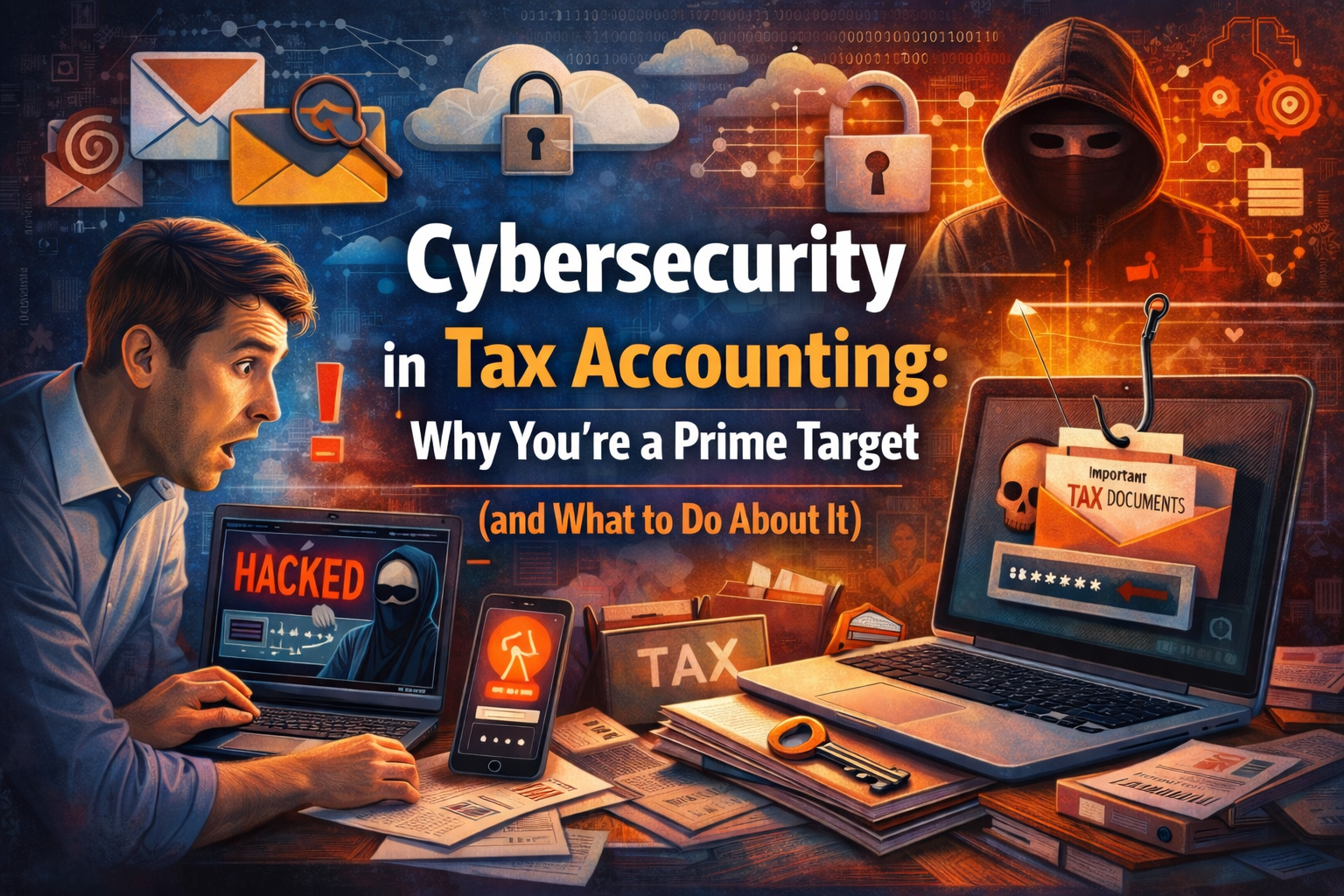
Cybercriminals love tax season almost as much as accountants hate it. It’s the time of year when inboxes overflow with PDFs, clients email Social Security numbers like they’re party invitations, and everyone is moving too fast to question whether that “urgent” message from a partner—or the IRS—might actually be a scam. In other words, it’s open season, and tax firms are the main attraction.
Tax accounting firms are not just financial professionals—they are custodians of some of the most valuable data on the planet. Social Security numbers, dates of birth, bank details, payroll records, prior-year returns, and corporate financials all converge in one place. That makes extremely attractive targets for cybercrime.
Why Tax Accounting Firms Are High-Value Targets
Cybercriminals target tax firms because:
- The data is highly monetizable
- Staff are under intense pressure during tax season
- Firms exchange large volumes of documents via email and portals
- Smaller firms often lack dedicated security teams
- One successful breach can impact hundreds of clients at once
This isn’t theoretical risk—it’s a business reality.
Cybersecurity Starts with People, Not Technology
Cybersecurity Awareness Training as an Onboarding Requirement
Every employee—partners, preparers, admins, interns—should complete cybersecurity awareness training as part of onboarding, before being given access to:
- Tax software
- Client portals
- File shares
- Remote access systems
Training should cover:
- Phishing and spear-phishing attacks
- Malicious attachments and links
- Social engineering tactics
- Business Email Compromise (BEC)
- Secure handling of client data
If an employee touches client data, they are part of your security perimeter.
Cybersecurity as Ongoing Continuing Education
Threats evolve constantly, so training can’t be “one and done.”
Best practice is:
- Annual cybersecurity training for all staff
- Short, periodic refresher modules
- Simulated phishing campaigns
- Training updates before tax season
This reinforces awareness when stress and workload are highest—exactly when mistakes are most likely.
Email Security: The Front Door for Most Attacks
Email remains the number one attack vector for tax firms.
Critical controls include:
- Advanced email filtering and threat detection
- Phishing detection and reporting tools
- DMARC, SPF, and DKIM email authentication
- Warnings for external senders
- Blocking of known malicious file types
Many tax-firm breaches begin with a single, well-crafted email that looks just legitimate enough.
Multi-Factor Authentication (MFA) Everywhere It Matters
Passwords alone are no longer sufficient, especially in tax environments.
MFA should be enforced for:
- Email accounts
- Tax software
- Client portals
- Remote access (VPNs, RDP)
- Cloud platforms
MFA dramatically reduces the success rate of stolen credentials, which are commonly sold on underground markets.
Endpoint Security: Protect Every Device
Every workstation handling tax data should have:
- Modern endpoint detection and response (EDR)
- Real-time threat monitoring
- Automatic isolation of infected devices
- Centralized management and alerting
One compromised laptop can be all it takes to expose an entire firm.
Secure Client Data Exchange (Email Is Not Enough)
Clients will continue to email sensitive documents—because that’s what clients do. But firms should:
- Provide secure client portals
- Use encrypted document exchange platforms
- Discourage sending SSNs and tax documents via plain email
- Clearly communicate secure submission policies
Security only works when it aligns with real client behavior.
Access Control & Least Privilege
Not everyone needs access to everything.
Firms should:
- Limit access based on role
- Remove access immediately when staff leave
- Review permissions regularly
- Separate administrative privileges from daily user accounts
This limits damage if an account is compromised.
Backups, Incident Response, and the “Oh No” Plan
Even strong security doesn’t guarantee immunity.
Every tax firm should have:
- Encrypted, tested backups (on-site and off-site)
- A documented incident response plan
- Clear roles for IT, management, and legal response
- A communication plan for clients if something goes wrong
Hope is not a strategy—preparation is.
Cybersecurity Is a Business Risk, Not Just an IT Issue
For tax accounting firms, cybersecurity failures can result in:
- Regulatory exposure
- Client lawsuits
- Reputational damage
- Loss of trust
- Business interruption during peak season
Cybersecurity is no longer optional, and it’s no longer just an IT problem, it’s a firm-wide responsibility.
Final Thought
Tax firms spend months preparing clients for audits, compliance, and financial risk. Applying that same mindset internally—to cybersecurity—protects not just systems, but reputations, livelihoods, and client trust. Click here for a checklist to see what level of cybersecurity readiness your firm has.